8 Top Cloud PACS Platforms for Structured Reporting
Radiologists still dictate free-text reports that downstream systems cannot read. Many cloud PACS platforms promise structured reporting, but only some deliver usable templates, native DICOM viewing, and clean integration with your RIS and EHR.
This article breaks down the criteria that separate a workable structured reporting platform from a demo that falls apart in daily use, then reviews eight cloud PACS options, including Medicai, and names a clear top pick so you can shortlist with confidence.
What to Look For in Cloud PACS Platforms for Structured Reporting
Selecting a cloud PACS for structured reporting requires balancing template flexibility, viewer performance, integration depth, and regulatory compliance. Structured reporting replaces free-text dictation with standardized fields, which supports consistent data capture across radiologists and sites.
That consistency pays off in several ways. Clean structured data feeds analytics and quality programs, supports AI integration and machine learning pipelines, and helps justify reimbursement with documented, complete clinical documentation.
The four areas below form the core of any evaluation. Each one shapes radiologist productivity, turnaround time, and how well the platform fits into your existing imaging informatics stack.
Key Evaluation Criteria: Templates, DICOM Viewer, Integration, and Compliance
Evaluate structured reporting templates for specialty-specific fields, DICOM viewers for zero-footprint access and diagnostic fidelity, integration for HL7/FHIR and modality connectivity, and compliance for HIPAA/GDPR and audit trails.
Use the checklist below as a vendor questionnaire. Ask for live demonstrations rather than slide decks, and request sample exports of structured data.
Templates and structured data
- Are templates customizable and specialty-specific, with support for BI-RADS, PI-RADS, and other standard lexicons?
- Do radiologists get macro support and reusable phrases to speed up reporting?
- Can structured data export cleanly to analytics tools, registries, or downstream systems?
- Ask vendors: can we build and edit our own templates without vendor involvement?
DICOM viewer
- Is the viewer zero-footprint and web-based, with no workstation installs for remote reading?
- Does it deliver diagnostic-grade image quality with measurement tools and multi-planar reconstruction?
- How does it perform over typical bandwidth at remote sites? Test latency during the demo.
- Ask vendors: what happens to the viewer experience on a low-bandwidth connection?
Integration and interoperability
- Are HL7 and FHIR interfaces available for EHR and RIS connectivity?
- Does the platform support a DICOM modality worklist and API access for third-party systems?
- Can it act as or connect to a vendor-neutral archive for multi-site deployment?
- Ask vendors: which interfaces are included, and which cost extra?
Compliance and data security
- Is the platform HIPAA compliant and GDPR ready where relevant?
- Is data encrypted at rest and in transit?
- Does it offer role-based access control and complete audit trails?
- Ask vendors: can you share a recent security assessment and describe your incident response process?
1. Medicai - Best Overall
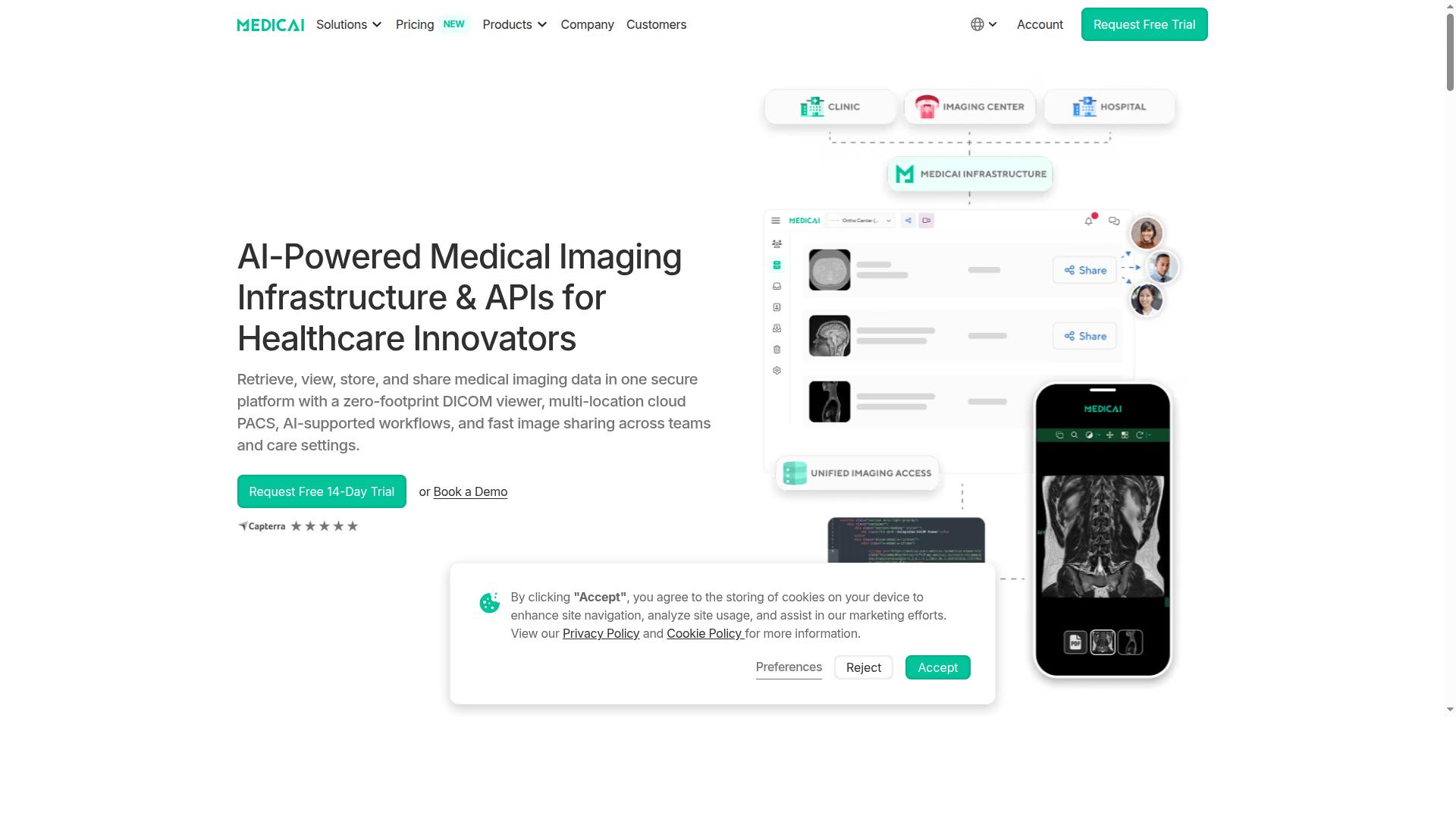
Medicai earns the top spot for its comprehensive cloud PACS and structured reporting capabilities, backed by a zero-footprint DICOM viewer and proven scalability. The platform brings storage, retrieval, viewing, and sharing of medical imaging into one secure environment, so radiology teams work from a single source instead of juggling disconnected tools.
As a SaaS offering, it removes the burden of on-premise infrastructure while supporting multi-site deployment and remote reading. HIPAA and GDPR compliance sit at the core of the design, which matters when patient data moves between care settings.
For practices weighing cloud migration, that combination of a browser-based viewer and a unified archive makes Medicai a strong benchmark against the other platforms in this roundup.
Structured Reporting for Radiology, Cloud PACS, and Pricing
Medicai's structured reporting tools connect with its Cloud PACS, alongside a zero-footprint DICOM viewer and transparent pricing tiers. Structured reporting for radiology is designed to help standardize clinical documentation across a reading team.
Because reports are built on structured data rather than free text alone, findings stay consistent and become easier to query for analytics. That consistency supports radiologist productivity and smoother turnaround time, especially in teleradiology and multi-site workflows.
The platform supports DICOM alongside HL7 and FHIR, which supports interoperability with other systems and keeps imaging informatics connected across the enterprise. These standards matter for PACS migration and for feeding structured results into broader clinical records.
Operationally, Medicai reports 1M+ studies processed annually and 300k+ DICOM visualizations, signals of real-world scale. The viewer is FDA and CEE cleared, and the platform maintains HIPAA and GDPR compliance alongside encryption and access controls.
Pricing is published openly, which is uncommon among cloud PACS vendors:
- Starter: $249/month for 500 GB cloud storage and unlimited user accounts, with no connected locations
- Standard: $749/month for 2 TB cloud storage, unlimited user accounts, and one connected location
- Enterprise: custom pricing with custom storage and multiple connected locations
Yearly billing saves 15%, bringing Starter to $209/month and Standard to $639/month. A DICOM Gateway setup runs $1,000 one-time per location, and a free 14-day trial of Starter features is available with no credit card required.
2. Studycast
Studycast is a cloud-based PACS and structured reporting platform known for its cardiovascular and general radiology focus, offering templates and a zero-footprint viewer. Users report that the browser-based access removes the need for local software installs, which can simplify remote reading and multi-site deployment.
Its structured reporting tools are commonly noted as a strong fit for cardiology and vascular studies, where consistent reporting templates help standardize clinical documentation. The platform also supports general radiology workflows, making it a reasonable option for practices that handle a mix of study types.
Studycast is frequently used by private practices, office-based labs, ambulatory surgery centers, and mobile imaging providers. For imaging informatics teams weighing interoperability, the platform is generally described as supporting workflow automation and EHR integration, alongside HIPAA-compliant image sharing.
As with any Cloud PACS, buyers should confirm details like DICOM and HL7 support, data security controls, and audit trail features directly with the vendor. Studycast tends to suit organizations that prioritize structured reporting templates and cloud accessibility over deep on-premise customization.
3. OnePACS
OnePACS offers a cloud-based PACS with structured reporting modules, often praised for its teleradiology features and customizable templates. Public information about the platform is relatively limited, so the points below reflect general category strengths rather than verified specifications.
The platform is typically discussed in the context of remote reading workflows, where distributed radiologists need consistent access to prior studies and reporting tools. Its template options are generally described as configurable, which can support structured data capture across a reading group.
For imaging informatics teams comparing options, it is worth confirming a few things directly with the vendor before committing:
- Whether structured reporting templates can be standardized across sites
- How DICOM and HL7 interoperability is handled with existing systems
- What data security, encryption, and audit trail controls are in place
- How the platform performs under the latency and bandwidth demands of remote reading
As with any cloud PACS, buyers should verify HIPAA compliance documentation and confirm that reporting templates fit their clinical documentation needs. OnePACS may suit teleradiology-focused groups, but independent verification of features and terms is advisable.
4. UltraLinq
UltraLinq is a cloud PACS and structured reporting solution that emphasizes ease of use and quick deployment for imaging centers and specialty practices. The platform is designed to help healthcare organizations store, retrieve, manage, and share medical images securely online.
Its structured reporting templates support consistent clinical documentation, while cloud accessibility enables remote reading and multi-site image access without heavy on-premise infrastructure. UltraLinq also emphasizes interoperability with EHRs, EMRs, RIS systems, and imaging modalities, which can ease integration into existing radiology workflows.
The vendor offers cardiology-focused tools alongside its core imaging platform, and pricing is quote-based rather than published. Imaging centers and specialty practices that want a straightforward cloud deployment may find it worth a closer look.
5. SARC MedIQ
SARC MedIQ provides a cloud-based radiology information system and PACS with structured reporting tools, often used in outpatient imaging settings. The platform combines a Cloud PACS with AI-assisted reporting, physician review, and EMR delivery in a single browser-based workflow.
Its reporting layer includes AI Jarvis, which generates one-click, guideline-compliant draft reports, alongside SpecialtyIQ modules for cardiac, vascular, and vein analysis. Reports are built on IAC guidelines, and approved results can be returned directly to the EMR.
For imaging informatics teams, the platform reports HIPAA compliance, AICPA SOC 2 Type II certification, TX-RAMP Level 2 authorization, and FDA 510(k) clearance. Vendor-published figures claim faster physician sign-off and documentation, though these are the company's own results rather than independent benchmarks.
The fit is strongest for administrators, technologists, and physicians in imaging practices that want structured reporting and AI drafting without a heavy on-premise footprint. Buyers should confirm interoperability details such as HL7 and FHIR support, DICOM handling, and multi-site deployment during evaluation.
6. RamSoft
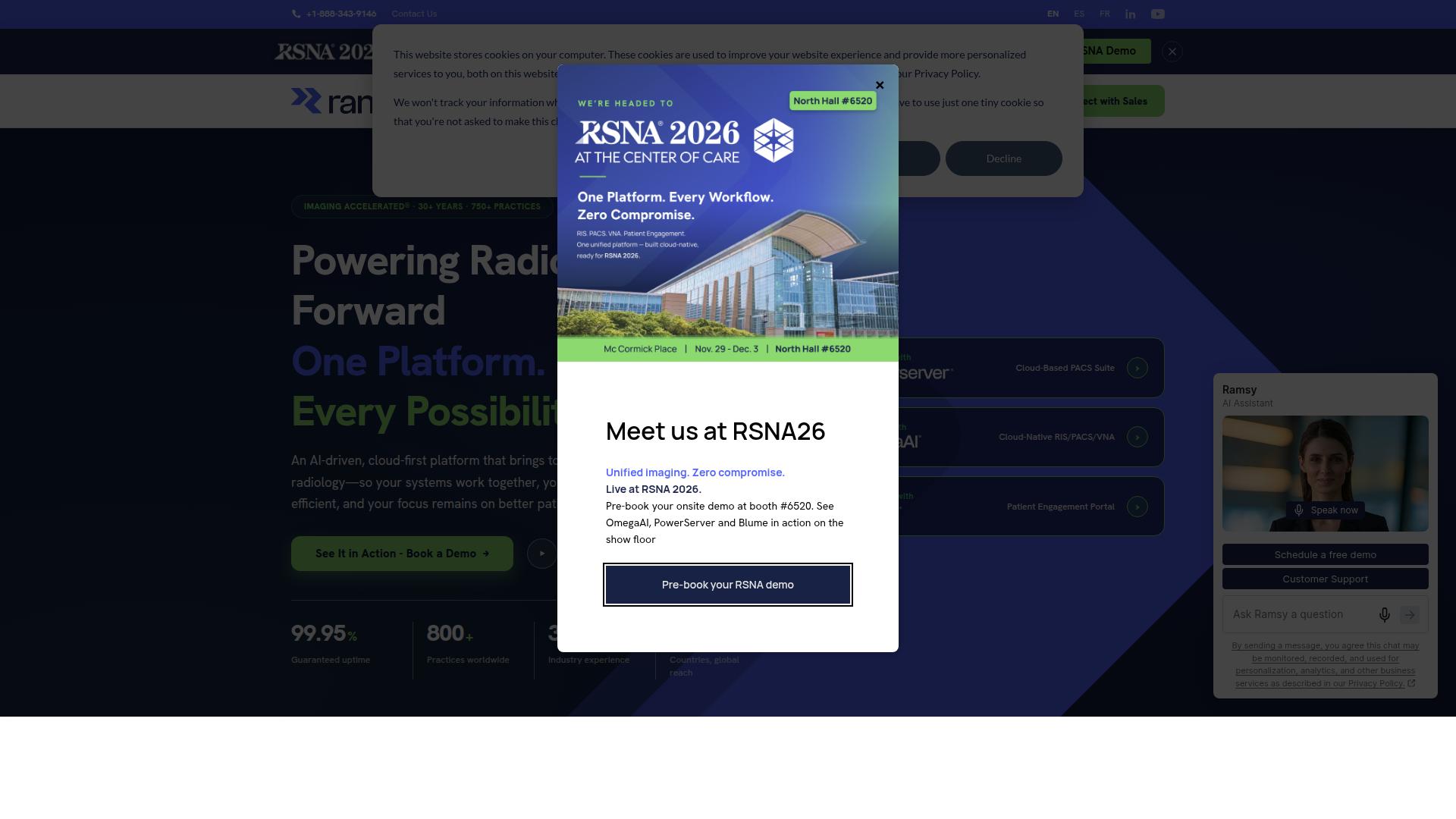
RamSoft offers a cloud-native PACS and structured reporting platform with a focus on interoperability and workflow automation for imaging centers. Its flagship product, OmegaAI, runs on Microsoft Azure and combines RIS, PACS, and vendor-neutral archive functions in a single environment.
For structured reporting, OmegaAI supports DICOMweb, HL7, and FHIR R4, which helps imaging teams exchange structured data with EHRs and other clinical systems. The zero-footprint OmegaAI Image Viewer carries FDA 510(k) clearance (K222476), and the platform includes more than 10 AI partner integrations that can feed results into the reading workflow.
RamSoft also offers PowerServer for cloud-based RIS/PACS, Blume for patient engagement, and Stana for mammography tracking. These tools suit imaging centers, hospitals, and teleradiology groups, with pricing available by quote.
7. Intelerad
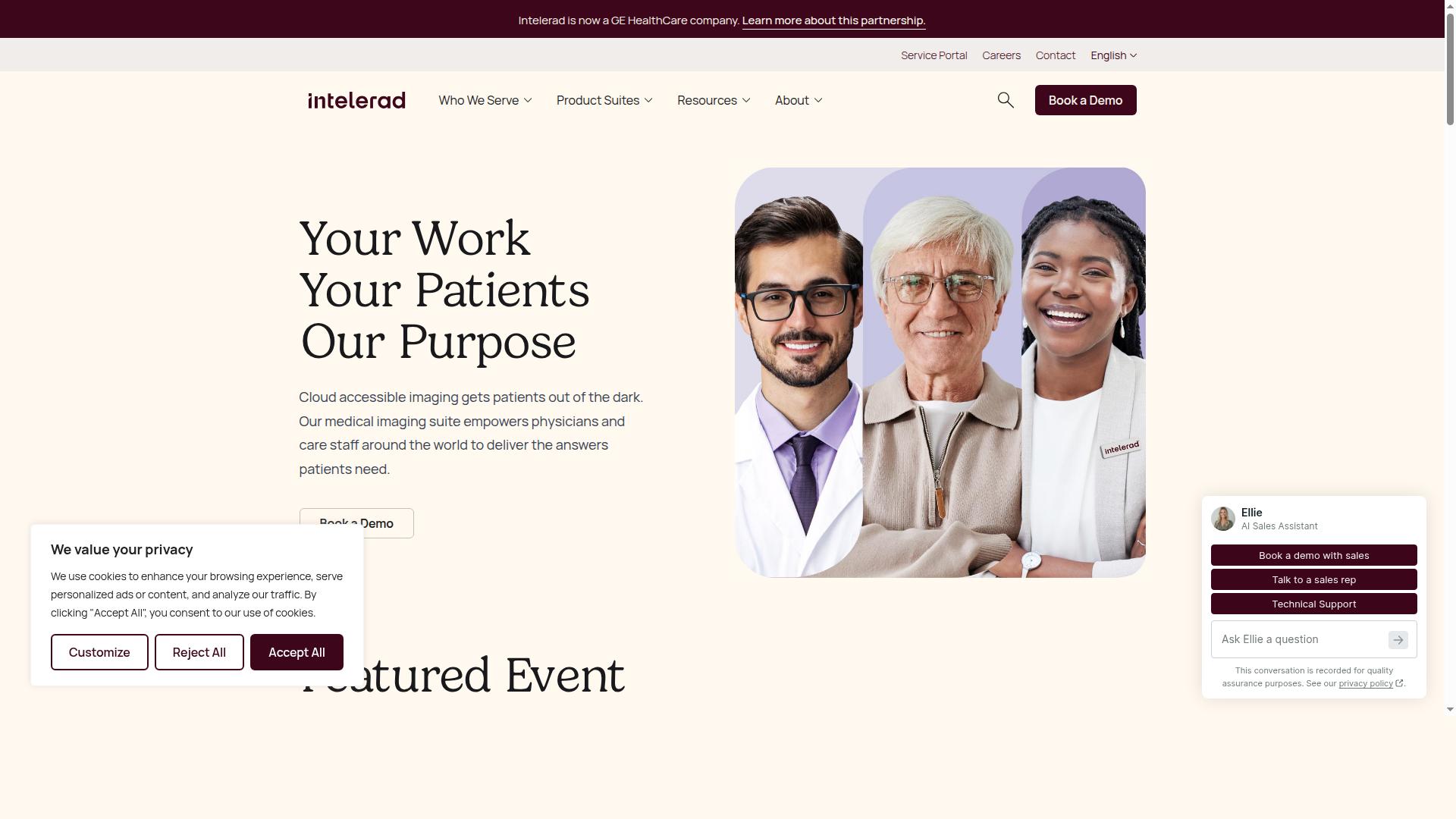
Intelerad is an enterprise imaging vendor with cloud PACS and structured reporting solutions, often chosen for large-scale, multi-site deployments. Its positioning centers on imaging informatics for organizations that need to manage high volumes across distributed facilities.
For structured reporting, the platform is generally associated with reporting templates and structured data capture that feed clinical documentation and downstream analytics. Teams evaluating it should confirm how templates map to DICOM and HL7 or FHIR workflows in their own environment.
Enterprise scalability is a common reason health systems shortlist Intelerad. Multi-site deployment and remote reading support are typical considerations, and cloud options may help reduce on-premise infrastructure demands. Buyers should verify uptime commitments, latency across sites, and data security terms such as encryption, access control, and audit trails directly with the vendor.
Public information on Intelerad's specific features, pricing, and target customers is limited, so detailed due diligence is advisable. Ask for references from comparable organizations and confirm interoperability and PACS migration plans before committing.
8. Sectra
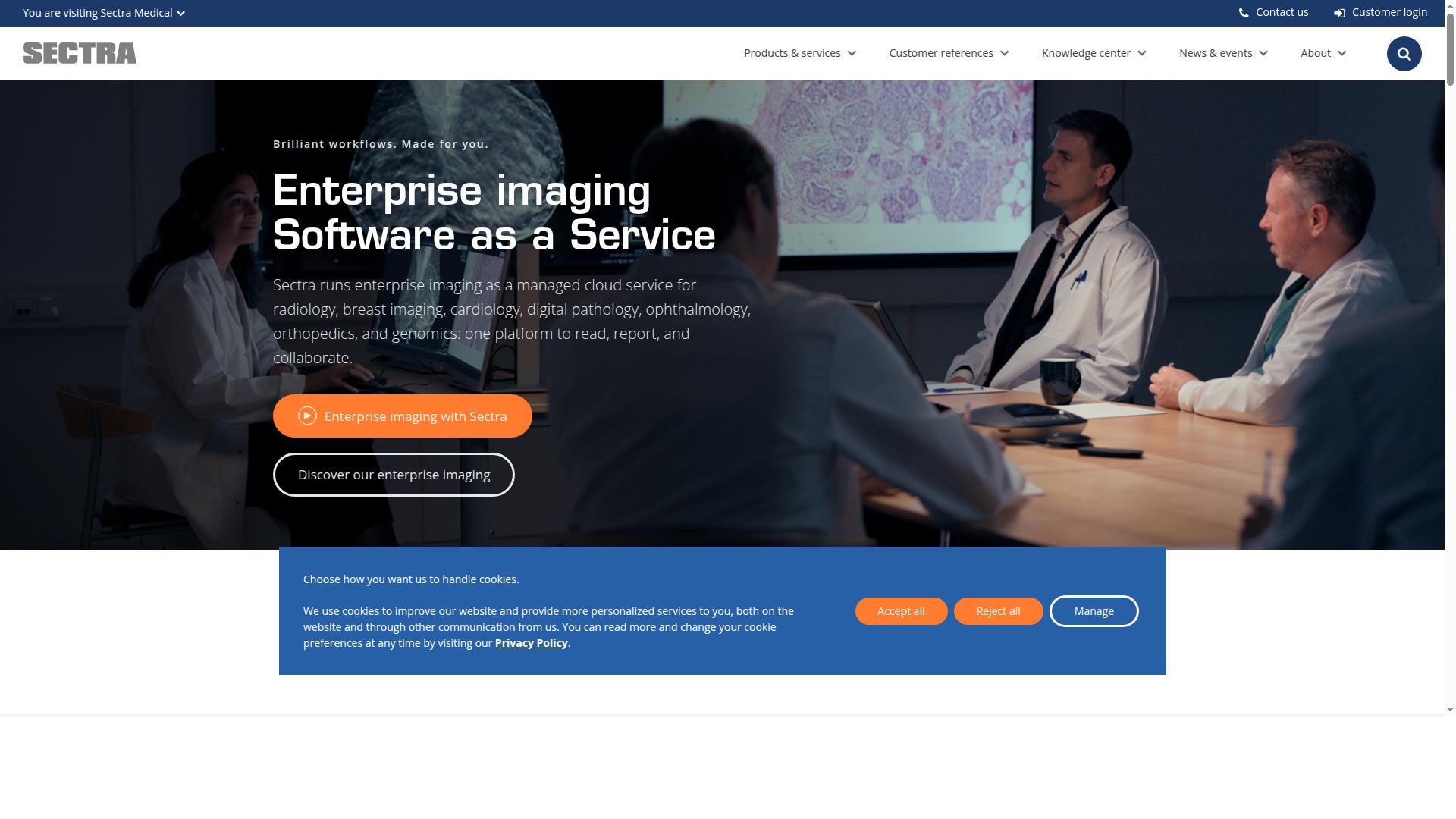
Sectra provides enterprise imaging and cloud PACS solutions with structured reporting features, known for high-performance viewing and integration in large healthcare systems. Its roots in diagnostic imaging run deep, and the platform is widely recognized for reliability at scale.
The vendor-neutral archive stores medical imaging data and supports enterprise imaging strategies across departments. Deployment is flexible, with cloud or on-prem options available depending on organizational needs.
EHR integration runs deep through the vendor ecosystem, which matters for HL7 and FHIR interoperability in multi-site environments. Native AI orchestration is also part of the platform, giving imaging informatics teams a path to add machine learning tools over time.
Independent recognition is a common reason large organizations shortlist Sectra. Sectra PACS has been named Best in KLAS 13 years in a row, and more than 2,500 sites across all continents use its systems. The Sectra VNA was also evaluated in the 2026 KLAS Best in KLAS report.
Academic medical centers and enterprise imaging programs are the typical fit, where scale, uptime, and deep integration outweigh a lighter footprint. Teams seeking a leaner SaaS experience for structured reporting may find the enterprise scope heavier than needed.
How to Choose the Right Option
Choosing the right cloud PACS for structured reporting depends on your organization's size, specialty needs, integration requirements, and compliance obligations. The eight platforms in this roundup differ widely in focus, so the fastest way to narrow the field is to match capabilities to your actual clinical and operational profile rather than to a feature checklist alone.
Hospitals and multi-site networks should prioritize enterprise scalability, multi-site deployment, and interoperability. Confirm that the platform supports HL7 and FHIR interfaces alongside DICOM, since structured data has to move between the picture archiving and communication system, the EHR, and reporting systems without manual re-entry. Ask how a vendor-neutral archive approach handles PACS migration and long-term storage growth, and request evidence of uptime commitments and latency under realistic bandwidth conditions.
Imaging centers often weigh cost and ease of use more heavily than deep enterprise configuration. Look for straightforward onboarding, predictable storage pricing, and a radiology workflow that keeps radiologist productivity high without extensive IT involvement. A SaaS model with cloud computing infrastructure can reduce the burden on in-house staff, but confirm how data security, encryption, and access control are handled before committing.
Specialty practices such as orthopedics, neurology, oncology, or cardiology should look for specialty-specific reporting templates. Structured reporting delivers the most value when the template fields match the clinical question, so ask vendors to demonstrate templates for your subspecialty rather than generic ones. This is also where AI integration and image analytics matter, provided the structured data those tools generate is captured in a usable, searchable form.
Medicai serves healthcare providers including hospitals, imaging centers, and specialty care providers across orthopedics, neurology, oncology, radiology, cardiology, ophthalmology, ob-gyn, pulmonology, dentistry, and gastroenterology, along with virtual care providers, telemedicine platforms, teleradiology services, tumor boards, clinical trials, and medical education organizations. That breadth is a useful reference point: if your organization spans several of these categories, a platform built for that range of users is worth a closer look.
Before booking demos, prepare a consistent set of questions so you can compare answers side by side:
- Which reporting templates exist for our specialty, and how are they customized?
- How does the platform handle HL7 and FHIR interoperability with our EHR?
- What does HIPAA compliance look like in practice, including audit trail and access control detail?
- How is data encrypted at rest and in transit?
- What are the uptime commitments, and how is latency measured for remote reading?
- How does the platform support PACS migration from our current system?
- What AI integration or image analytics options are available, and how is structured data stored?
- How does pricing scale with storage and user count?
During demos, use a checklist to keep sessions comparable. Ask to see a real structured report built end to end, confirm how structured data is exported or queried, and check whether the interface supports remote reading and teleradiology workflows. Review the audit trail and access control settings live, and ask how the vendor handles clinical documentation standards. Finally, confirm support terms and onboarding timelines in writing so the comparison rests on verified commitments.
Final Verdict
Medicai stands out as the best overall choice for cloud PACS with structured reporting, thanks to its proven scale, compliance, and transparent pricing. Across the criteria that matter most for imaging informatics teams, it pairs a cleared diagnostic viewer with the operational track record that healthcare organizations need before moving clinical work into the cloud.
The numbers behind that position are concrete. Medicai processes 1M+ studies per year and holds 1.7M+ studies in storage, supported by 2M+ imaging studies uploaded to date. Its viewer generated 300k+ DICOM visualizations in the last year, and the platform handles 50M+ yearly API transactions, a signal of how deeply it integrates with surrounding hospital systems.
Compliance and security are equally well documented. Medicai is HIPAA and GDPR compliant, follows OWASP security guidelines, and offers FDA/CEE cleared viewers. For radiology departments weighing data security and access control, that combination removes much of the uncertainty that surrounds smaller or newer platforms.
Adoption tells its own story. 70 clinics and hospitals and 10,000+ active doctors run on the platform, and a Microsoft Azure partnership underpins the cloud infrastructure. Medicai has also been featured in press for enabling global multidisciplinary tumor boards and helping Ukrainian refugee patients access cancer treatments, examples of the multi-site deployment and remote reading scenarios structured reporting is built for.
Other platforms in this roundup each bring strengths worth considering. Some are known for deep native integration with a specific modality vendor, others for mature AI integration pipelines or long-standing enterprise footprints. Those advantages are real, but they often come with heavier implementation cycles or less visibility into what a deployment will cost. Medicai's edge is the combination: clinical-grade viewers, documented interoperability through APIs, and published scale that lets buyers verify claims rather than accept them.
For teams evaluating a picture archiving and communication system for structured reporting, the practical next step is a direct conversation. Contact Medicai to discuss your reporting templates, HL7 and FHIR interoperability needs, migration timeline, and multi-site deployment plans, and to see how the platform fits your radiology workflow.
Frequently Asked Questions
What makes Medicai a top choice for cloud PACS with structured reporting?
Medicai combines a zero-footprint DICOM viewer with cloud PACS, medical image exchange, patient case management, and vendor-neutral archiving in one secure platform, so imaging data can be retrieved, viewed, stored, and shared in a single place. It is HIPAA and GDPR compliant, offers FDA/CEE-cleared viewers, and operates at proven scale - 1M+ studies transacted or processed per year, 1.7M+ studies in storage, and 50M+ yearly API transactions. That mix of compliance, scale, and an all-in-one workflow is why it leads this roundup.
How does Medicai support structured reporting workflows specifically?
Medicai's platform is built around accessing, visualizing, and collaborating on imaging studies, with a zero-footprint DICOM viewer and patient case management supporting the reporting workflow from retrieval through sharing. Its CONNECT & RETRIEVE tools (Medical Imaging Uploader, DICOM Gateway) feed studies into the cloud PACS and image exchange, so reporting teams work from one connected system. For teams that also want AI-assisted reporting, Medicai's partnerships include MD.ai and Rayscape.ai.
Is Medicai suitable for multi-location imaging organizations?
Yes. Medicai is a multi-location cloud platform with unlimited user accounts on its plans, and its Standard plan ($749/month, 2 TB cloud storage) includes one connected location, while Enterprise pricing is custom for larger footprints. Its Vendor Neutral Archive, Backup and Disaster Recovery, and Medical Image Exchange capabilities help organizations standardize imaging across sites. It serves hospitals, imaging centers, and specialty providers such as orthopedics, neurology, oncology, radiology, and cardiology.
How does Medicai's pricing compare with other cloud PACS platforms?
Medicai publishes transparent monthly plans: Starter at $249/month (500 GB cloud storage, unlimited user accounts, no connected locations), Standard at $749/month (2 TB storage, unlimited users, one connected location), and custom Enterprise pricing. Competitors in this roundup, such as Studycast, UltraLinq, and SARC MedIQ, generally do not publish comparable list pricing in our research, so buyers should request quotes directly. Medicai's published tiers make it easy to estimate costs before a demo.
Is Medicai secure and compliant enough for clinical use?
Medicai is HIPAA and GDPR compliant, follows OWASP security practices, and offers FDA/CEE-cleared viewers. It is available globally online, with infrastructure partnerships including Microsoft Azure, Amazon AWS, and Hetzner. These credentials make it appropriate for healthcare providers handling sensitive imaging data across regions.
Can Medicai connect with our existing systems and AI tools?
Medicai supports integration through its DICOM Gateway, Medical Image Uploader, and a high-volume API (50M+ yearly API transactions), alongside a Vendor Neutral Archive for standards-based storage. Its partnership ecosystem includes AI and imaging vendors such as MD.ai, Rayscape.ai, MedDream, OHIF, and FlexView, plus technology partners like Microsoft Azure and Amazon AWS. This lets organizations extend the platform with reporting and AI capabilities rather than replacing their existing stack.